How AI Can Improve and Assist in Content Strategies
Artificial Intelligence is a powerful technology that has clearly changed our economic and social landscape. ChatGPT, Copy.ai, Jasper, and similar tools allow creative and inspired humans to become better informed and more efficient. The promise of Artificial Intelligence (AI) has become so prevalent that any content strategy that fails to leverage these powerful tools will quickly fall behind the competition.
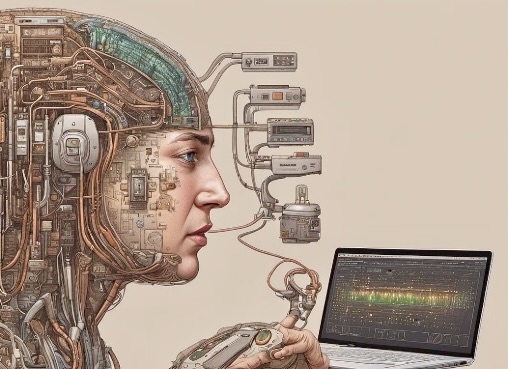
Recent research shows that over 100 million people use ChatGPT every day, processing more than one billion queries. This adoption rate recalls the rise of the first generation iPhone, which also transformed our daily lives in innumerable ways. While AI promises to change our world, it still has limitations to consider. There’s a difference between mimicking old ideas and creating something new and valuable–AI can only simulate what has already been written.
As Nick Cave puts it, AI “rejects any notion of creative struggle” while it commodifies artistic work. In his view, “ChatGPT’s intent is to eliminate the process of creation and its attendant challenges, viewing [the creative process] as nothing more than a time-wasting inconvenience that stands in the way of the commodity itself.”
To put it another way, authentic audience engagement and content value require creative struggle. AI tools can only mimic creativity. Machines cannot replace the human spark of inspiration or the struggle for it. Audience’s instinctively spot inauthentic and redundant work, turning away from the false without acknowledging why. In this post, I offer a few forbidden practices to be avoided at all cost. You’ll also find sound advice for leveraging AI without sacrificing the integrity of your brand.
First Experiment
In January 2023, a friend and software professional sent me a link to ChatGPT with a promise: “this will revolutionize working and writing forever.” So I experimented and then relented to my friend’s excitement–the world will never be the same.
One of my first queries asked ChatGPT to “write a country song in the style of Bob Dylan about forbidden love on a high school football team.” The results were both hilarious and astounding. The song illustrates the promise and peril of artificially generated content. Here’s the chorus I was offered:
Oh, they’d never understand, not beneath the Friday night lights,
Where dreams are built on broken hearts and long fights.
But you and me, boy, our love was our own kind of win,
Even if it’s a story this town will bury within.
The lyrics were laughable, clunky nonsense. However, the real shock was the production speed. ChatGPT generated a 40-line lyric sheet within thirty seconds. And while I don’t write music or songs, I could see how an AI-generated draft might help me conquer the “white bull” of the first blank page.
I’m not alone in this practice. While recent surveys show that 32% of marketers fear being replaced by AI, 42% of them use AI tools weekly for writing or generating content. Most report positive outcomes from generated content but warn these tools aren’t great for every use case.
Limitations of AI-generated Tools: The Don’ts
Since that first experiment, AI has helped my content creation in a number of ways. Used appropriately, these tools can assist in most aspects of my work. However, AI’s limitations must be respected to ensure the inherent worth of a good project. Here’s what I’ve discovered.
Don’t Use AI to Create New Content – The results are robotic and often highly plagiarized. It’s very tempting to type a blog post prompt into my favorite generator and let the machines do all the work. But the post just doesn’t work. The basic idea is often there, just buried under colloquialism and tech speak that feels stilted and too much like everything else on the internet. To quote Nick Cave one last time, AI “is a fiendish machine of artistic demoralization.”
Don’t Rely on AI for Final Drafts – AI is great for brainstorming, for repurposing new content, and for refining social posts or web pages. But as a final review, machine learning offers all the warmth and insight of stale bread. Personally, I drop each of my completed drafts into Jasper for proofreading and style checks. Once the machines have offered their best advice, I set the piece aside to work on other projects, returning with fresh eyes for final revisions.
Effective AI Assistance for Any Content Marketing Strategy
With AI tools, I’ve been able to double and sometimes triple my output. These efficiencies have been achieved by assigning the following roles and tasks to AI automation.
Research assistant: Today each web search engine offers its own AI assistant. Tools like Google Gemini help identify trends and insights that might otherwise get lost in sponsored search results. “Ask Gemini” allows me to gather subject-specific statistics from across the web in one easy prompt. AI can even help you search within specific channels, like social media or trusted news outlets, ensuring the authority of your information.
Sample Prompts:
What are the trending discussion topics in major news outlets for ensuring the stability of financial investments during volatile markets?
Over the last 30 days, what major themes have emerged from social media’s top influencers about the economy and foreign relations?
Performance Analysis: Analysis and predictive insights have always offered the greatest use cases from AI-automated tools. They enable real-time analysis based on specific criteria, which can be used to enhance the marketing performance of any creative asset. Tools like Hubspot, Google Analytics, and SEMRush offer AI-powered analysis that help optimize any campaign.
Sample Prompts:
Which of my top performing content assets could be customized to better engage smaller audience segments and drive role-specific engagement?
Which of my web pages have the highest bounce rate? And what subjects from my other web pages might lead to greater engagement within the high-bounce pages?
Repurposing Content: This is one of my favorite time-savers. After spending 2 hours drafting an engaging blog post, it can feel mind numbing to redraft that same subject for social media posts. Instead, I ask AI to draft a few ideas for me. Most tools can generate headlines and descriptions that have been calibrated for specific channels. Additionally, tools like Canva and Adobe Firefly can auto generate branded images optimized for channels like LinkedIn or Instagram.
This use case also allows me to bulk up a content library for multiple buyer personas. You can leverage AI to suggest how a current piece can be retargeted for a different audience. For example, if the brochure targets the finance team but I’d like to offer similar information to the operations team, AI can offer new headlines and approaches for those revisions.
Sample Prompts:
Draft 3 social media posts for LinkedIn targeted for software CFOs/CEOs based on the following blog post.
Revise the following brochure content to address key challenges that SaaS-technology project managers face in their work.
Campaign Ideation: This task pushes the AI research assistant a little further, enhancing campaign ideation with keyword research and analyzing your competitors’ current strategies. Often this research reveals where my client’s key value propositions can best reach identified gaps in the market. Armed with this information, I generate campaign ideas that offer inspiration and room for refinement. For example, when research shows a competitor has focused their efforts on product affordability, I counter by developing campaigns that demonstrate return on investment, such as case studies and testimonials.
Sample Prompts:
Analyze CompetitorsSite.com and Competitor’s social posts, provide their top 10 keywords and list their top 5 marketing campaigns for their product.
Generate 3 multitouch marketing campaign plans for MySite.com’s product, including the keywords “usage,” “metadata management,” and “accessibility features.”
Balance AI-generated Content with Human Creativity
While AI can draft, optimize, and scale content, it lacks the emotional depth and empathy that human creators bring. Over-reliance on AI can make your content feel disconnected from the audience. This puts innovative content creators on a tightrope between sacrificing value in the hope of attaining efficiency. The practices outlined above ensure that AI-generated content doesn’t overshadow the value of human creativity or sacrifice brand quality.
Are you looking for creative solutions to elevate your content strategy? Whether your business needs a complete demand generation strategy alignment or a few content pieces to generate more leads, I specialize in creating effective, targeted content that leads to new business. Contact me today to get started!
 Craig Wise
Leave a reply to Storytelling Takes the Lead – Craig Wise Cancel reply