Data-Driven Analysis to Boost Awareness and Conversions
Follow the evidence, but trust your gut. Whether I’m watching Luther, Vera, or Inspector Morse mysteries, these TV detectives offer crucial advice for demand generation marketing. Solving a mystery requires cold, hard evidence. And converting prospects into customers requires the same principle. Data—tangible, trackable insights that we gather, analyze, and use to make data-driven decisions—is the evidence that enables marketing success. While many marketers cast a wide net and hope something sticks, great B2B marketing relies on data-driven tactics to optimize strategy, target the right audience, and eventually drive new revenue.
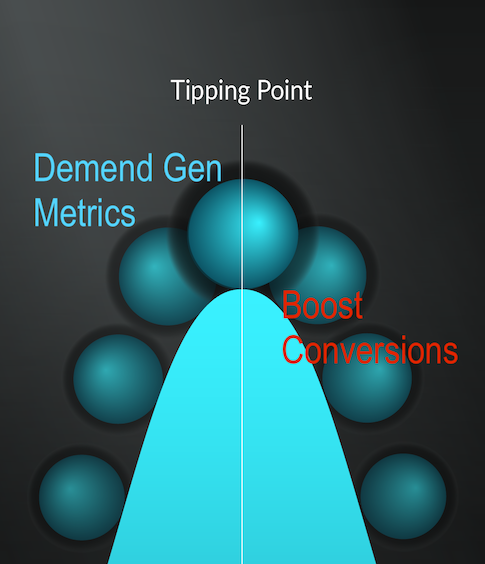
Malcolm Gladwell made a name for himself with “the law of the few” in The Tipping Point. He demonstrated that a small group of people, around 20% give or take, can trigger social epidemics or widespread change. As marketers, many of us want that same influence from our brand. But what should we measure to get there? What metrics can help ensure your demand generation efforts are effective? By closely tracking and analyzing the following key metrics, you can supercharge any B2B marketing campaign.
1. Site Visitors: The top of Your Funnel
Within digital demand generation, visitors to your website are often the first measure of the lead generation process. Setting aside comparisons of event attendees and business cards gathered in your booth, I prefer data points like site visitors, their bounce rate, and the number of marketing qualified leads (MQLs) gathered. These numbers tell a coherent story. For example, attracting 1,000 visitors doesn’t mean much if 990 of them bounce within one minute of finding your page. Tools like Google Analytics allow you to measure the overall health of your website marketing strategy.
Why it matters: High-quality traffic leads to increased interest, deeper engagement, and more conversions. Site visitors give a clear picture of your marketing reach, insights into brand awareness, and potential market size. Dive deep into current traffic by segmenting visitor data into location, device, and behavior to understand who you’ve reached and how.
2. Email Clickthroughs: Analyzing Engagement
Email remains a highly effective channel for B2B demand generation. Once you have a prospect’s contact information, measuring the clickthrough rate (CTR) indicates the effectiveness of targeting and messaging. Low CTR provides evidence that the email wasn’t compelling or relevant to the prospect. Tools like Hubspot offer CTR data and help analyze prospect engagement through the sales funnel by measuring the actions taken.
Why it matters: If your messaging resonates with your target audience, email clickthroughs will increase. If you’re not seeing action, it’s time to revise subject lines, copy, and maybe even your value proposition. From a lead nurture perspective, CTRs can also provide insight into which stages of your funnel are working and where you can improve.
3. SEO Ranking: Measuring Organic Traffic
If a potential prospect types a problem into Google’s search bar, such as “can I automate this document signature workflow?,” does your solution appear on the first page? Search engine optimization (SEO) ranking (and Google Ads) ensures that your web page appears in front of your target audience. Measuring SEO metrics for blog posts, landing pages, or whitepapers can reflect how well your content has been optimized. The higher your SEO ranks, the greater your numbers of organic web traffic and brand awareness.
Why it matters: It’s not about ranking with popular keywords; it’s about ranking for the right keywords—the terms and phrases your potential buyers are actually searching. SEO rankings help you optimize your copy and drive more qualified traffic to your site.
4. Number of Leads: The Core of Your Funnel
Without leads, your marketing funnel will dry up and your sales team will be negatively impacted. Whether measuring MQLs or sales qualified leads (SQLs), gathering quality leads requires more than a landing page and hope. From a content perspective, if a page isn’t producing leads then I know the content is not providing real value to the prospect. As one co-worker often reminds leadership and sales, “It’s a funnel, not a pipe.” So the more leads you can generate from the beginning, the greater the likelihood for converting prospects into customers.
Why it matters: The number of leads captured demonstrates campaign effectiveness and buyer engagement. Measuring lead quality requires the next pillar of demand generation, conversion, as well as lead scoring. Data on lead sources, demographics, and behaviors allow you to refine audience targeting and improve future lead generation.
5. Conversion Rate: The Bottom Line to Success
High SQL numbers show the value of demand generation, but if SQLs don’t convert into customers, your efforts aren’t producing revenue. Conversion rate – the percentage of leads that become paying customers – might be the only demand generation metric in your C-suite’s dashboard. This one measure demonstrates the return on investment (ROI) for all of marketing; it shows the quality of your funnel, the relevance of your offering, and the acumen of your sales team.
Why it matters: Conversion rates help you determine if demand generation marketing translates into business outcomes. Tracking this vital metric allows you to identify weak points in lead nurturing and sales handoff; from here you can make data-driven adjustments to increase conversions.
Data-Driven Demand Generation Boosts Revenue
The competitive, fast-paced nature of demand generation marketing requires more than intuition. Leveraging data-driven tactics and tracking the key metrics of site visitors, email clickthroughs, SEO ranking, lead capture, and conversion rates, provide an informed understanding of marketing’s efforts. These insights help you continuously optimize your campaigns, personalize your messaging and targeting, and may lead to a real tipping point for your business.
I will always shout that “content is king” with regard to the tactics within Demand Generation Marketing. But a king who ignores their data will soon lose their throne. Embrace the power of metrics to improve content and watch your marketing strategy thrive.
Looking for an experienced content strategist to help drive lead nurture and conversions? Check out the compelling content in my portfolio to see how storytelling can help you stand out in a crowded market landscape. Contact me here to discover how I help my clients reach their audience with the right message.
 Craig Wise
Leave a comment